Brakes are the one system on your car you never want to gamble with. The good news is they rarely quit without warning — the pads, rotors, and fluid all give you signals long before you're in trouble. The trick is knowing what those signals mean so a $150 pad job doesn't turn into a $600 rotor-and-caliper job. Here are the five we tell every customer to watch for.
1. A high-pitched squeal when you slow down
Most brake pads have a small metal tab called a wear indicator built right in. When the pad wears down to about 3 millimeters, that tab starts to drag on the rotor and makes a steady squeal whenever you brake. It's annoying on purpose — it's the pads telling you they're near the end. A squeal that shows up and stays is your cheapest, easiest warning. Catch it here and you're usually just replacing pads.
Wet-morning squeak is different
A light squeak the first few stops on a humid South Florida morning is often just surface rust burning off the rotors, and it clears within a block or two. A squeal that's there every single stop is the wear indicator — don't wait on that one.
2. A grinding or growling noise
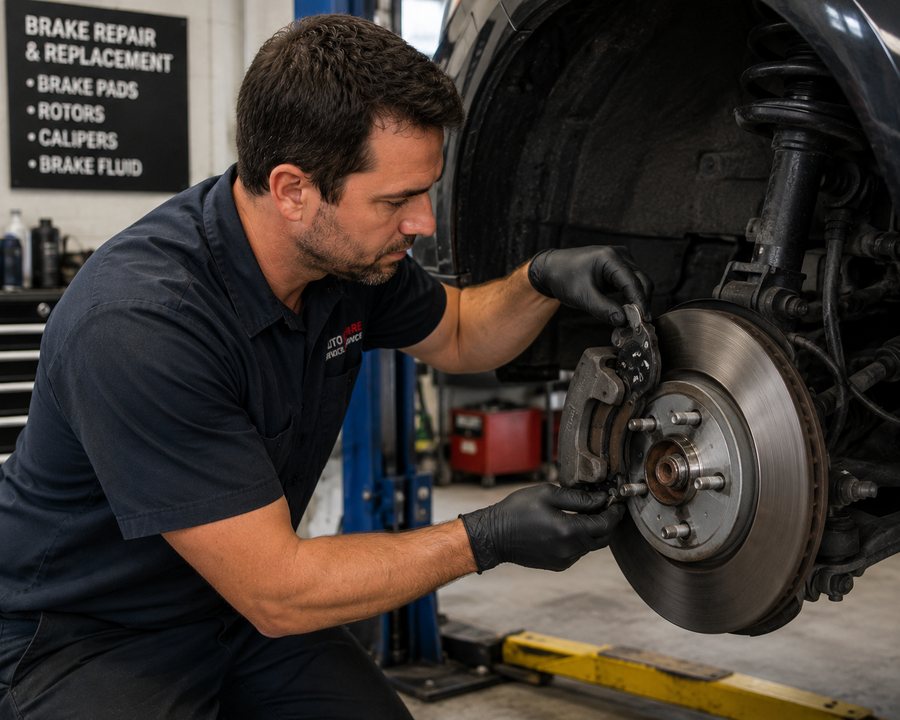
Grinding is squealing's expensive cousin. It usually means the pad material is completely gone and bare metal is now pressing against your rotor. Every stop at this point is scoring grooves into the rotor, which is why grinding often turns a pad replacement into a pad-and-rotor replacement. If you hear metal-on-metal, stop driving on it and get it looked at right away.
3. A soft, spongy, or sinking pedal
Your brake pedal should feel firm and stop in roughly the same spot every time. If it feels soft, sinks slowly toward the floor, or you have to pump it to get a solid bite, that points to a problem in the hydraulic side — air in the lines, a fluid leak, worn seals, or a failing master cylinder. This is not a wear-and-tear "watch it" item. A pedal that doesn't feel right should be checked before your next long drive.
4. Longer stops, pulling, or a shudder through the pedal
Pay attention to how the car behaves when you brake:
- Longer stopping distance — you're pressing harder and covering more ground before stopping. Worn pads or glazed rotors are common culprits.
- Pulling to one side — often a sticking caliper or uneven pad wear, so one wheel is doing more of the work than the others.
- A pulsing or shudder through the pedal or steering wheel when you brake — usually warped rotors, which heat and stop-and-go traffic make worse over time.
5. A dashboard brake light
Two different lights matter here. Your ABS light points to the anti-lock system and needs a scan to read the code. The red BRAKE light can mean your parking brake is on — or that your brake fluid is low, which often ties back to worn pads or a leak. If the red light comes on while you're driving and the parking brake is off, treat it as urgent.
The bottom line: squealing means "soon," grinding means "now," and anything that changes how the pedal feels means "before you drive again." Brakes caught early are one of the cheapest repairs on a car — and one of the most expensive to ignore.
When to just call us
If you've got any of these signs — or you just want peace of mind before a road trip — a brake inspection is quick and honest. We'll show you exactly how much pad life is left and tell you straight whether it's "keep driving," "plan for it soon," or "let's take care of it today." No upselling, no scare tactics. That's the whole point of two dads doing the work.